At first glance, Takaful and conventional insurance appear remarkably similar. Both provide financial protection against unexpected losses, collect regular contributions from participants or policyholders, and compensate eligible claims.
However, beneath these similarities lies one of the most important distinctions in modern insurance: how risk is managed.
Conventional insurance is based on risk transfer, while Takaful is based on risk pooling.
What Is Risk Transfer?
Risk transfer occurs when an individual or business transfers the financial consequences of a potential loss to an insurance company.
In exchange for paying a premium, the insurer accepts responsibility for covered losses.
The insurer owns the premiums, assumes the risk, pays claims, and retains any remaining profits after expenses and claims.
What Is Risk Pooling?
Risk pooling follows a different philosophy.
Rather than transferring risk to an insurer, participants contribute voluntarily to a common fund that they collectively own.
This shared fund is used to compensate participants who experience covered losses.
In this model, participants are effectively helping one another through mutual cooperation (Ta'awun).
The Role of the Takaful Operator
Unlike a conventional insurer, the Takaful operator does not own the participants' fund.
Its responsibility is to administer the fund professionally, assess claims, manage investments ethically, and ensure compliance with the agreed operating model.
The operator may receive a management fee under the Wakalah model or share investment profits under the Mudarabah model.
Why Does This Difference Matter?
Risk pooling promotes a culture of solidarity, transparency, and shared responsibility.
Participants know that their contributions are helping fellow members of the community while also protecting themselves.
This cooperative approach aligns with the ethical principles of Islamic finance while remaining attractive to anyone seeking a transparent and community-oriented financial protection model.
Two Different Philosophies
Neither risk transfer nor risk pooling is inherently superior.
They simply represent different approaches to achieving the same objective: protecting people against financial uncertainty.
Understanding these two models allows consumers to make informed decisions based on their values, expectations, and financial objectives.
Conclusion
The true innovation of Takaful lies not in replacing insurance, but in rethinking how communities manage and share risk.
Rather than asking "Who carries my risk?", Takaful asks, "How can we protect one another together?"
That simple shift in perspective is what makes Takaful unique.
Continue Learning
Explore related Iman Risk Solutions pillar pages and structured resources.
Takaful in Canada Start with the principal Canadian guide to Takaful, governance, contributions, and regulation. Takaful Resources Browse structured learning paths covering Takaful fundamentals, funds, governance, and distribution. Islamic Insurance Canada Explore Islamic insurance terminology, Shariah governance, and the Canadian context.Discussion
No comments yet. Be the first to share your perspective.
Join the Conversation
Related Articles
What is Takaful? A Complete Guide for Canadian Muslims (2026)
Discover how Takaful (Islamic cooperative insurance) works, why it's Shariah-compliant, and when it will be available in Canada. …
Comment fonctionne une soumission Takaful ? Transparence, équité et clarté à chaque étape
Une soumission Takaful ne devrait pas se limiter à afficher un montant total. Découvrez comment une soumission transparente …
How Takaful Quotes Work: Transparency, Fairness, and No Hidden Fees
Discover how Takaful insurance quotes are built differently — with full transparency, cooperative principles, and no hidden costs. …
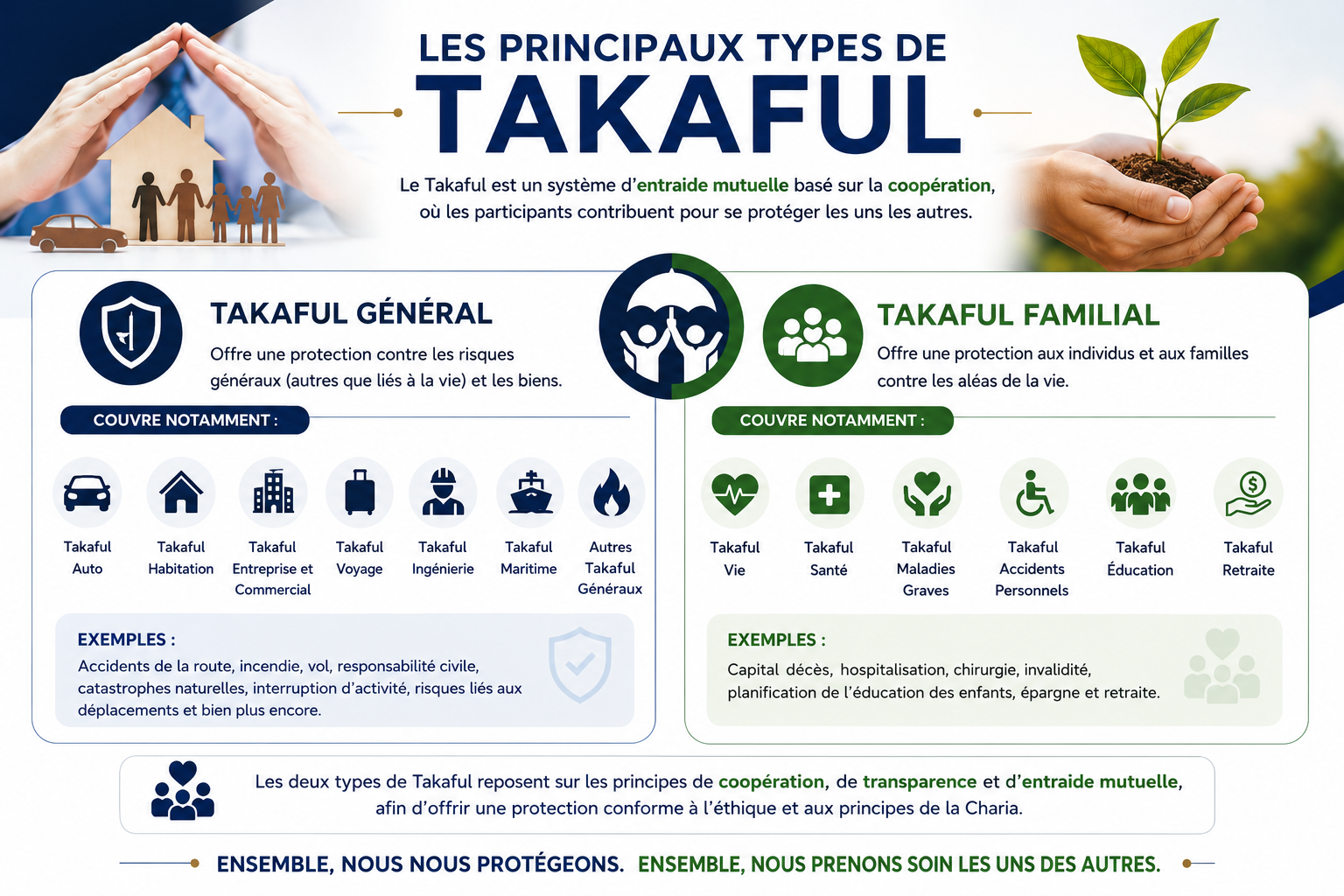
Les principaux types de Takaful : comprendre le Takaful Général et le Takaful Familial
Saviez-vous que le Takaful se divise en deux grandes catégories ? Découvrez les différences entre le Takaful Général …
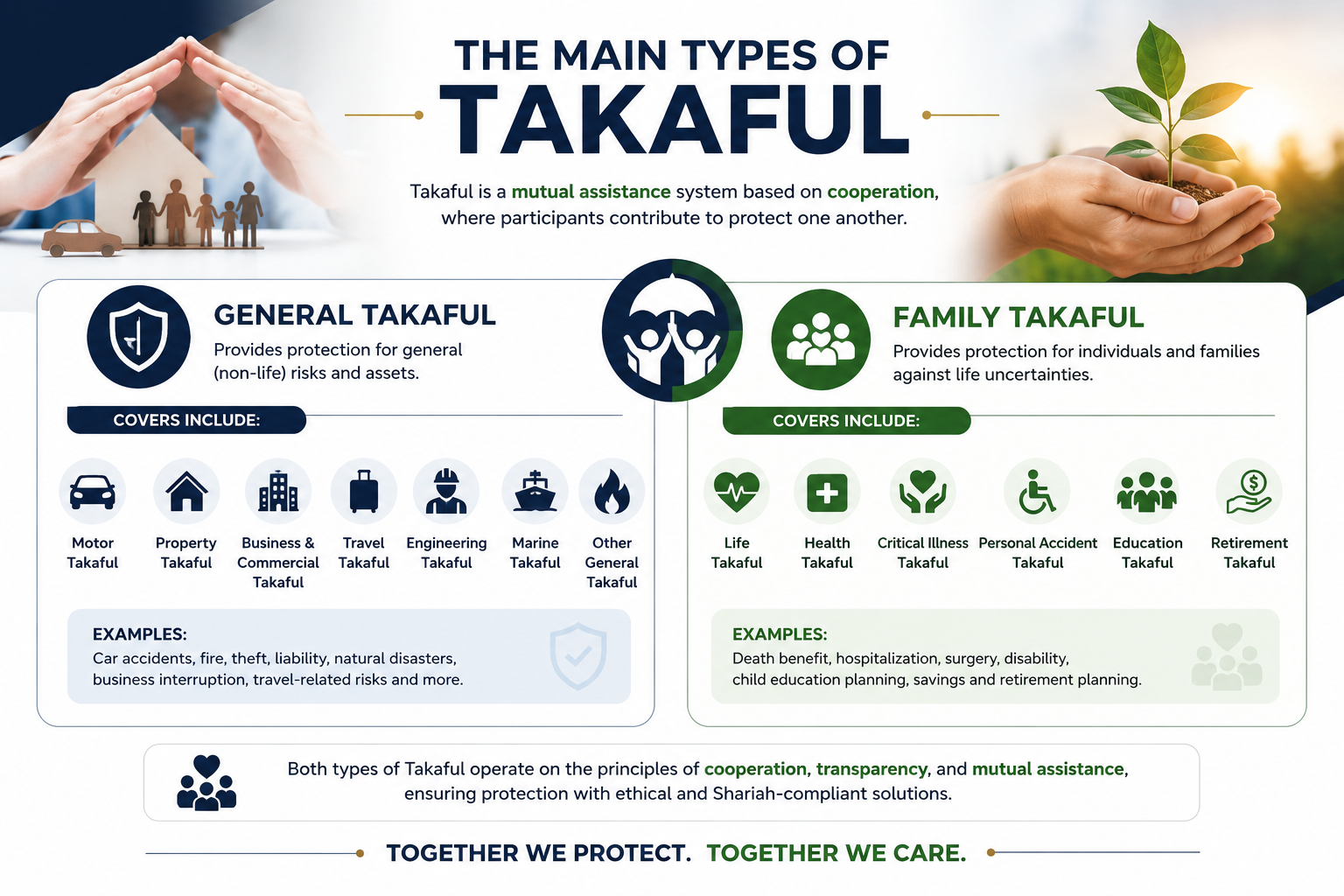
The Main Types of Takaful: Understanding General Takaful and Family Takaful
Did you know that Takaful is divided into two main categories? Learn the difference between General Takaful and …
Pourquoi un assureur agréé choisirait-il de s'associer à un MGA Takaful ? Comprendre la véritable proposition de valeur
Si les assureurs conventionnels comptent déjà des clients musulmans parmi leur clientèle, pourquoi s'associer à un Managing General …